
What Is a Credit Rating? Complete Beginner’s Guide to Ratings, Agencies & Their Impact
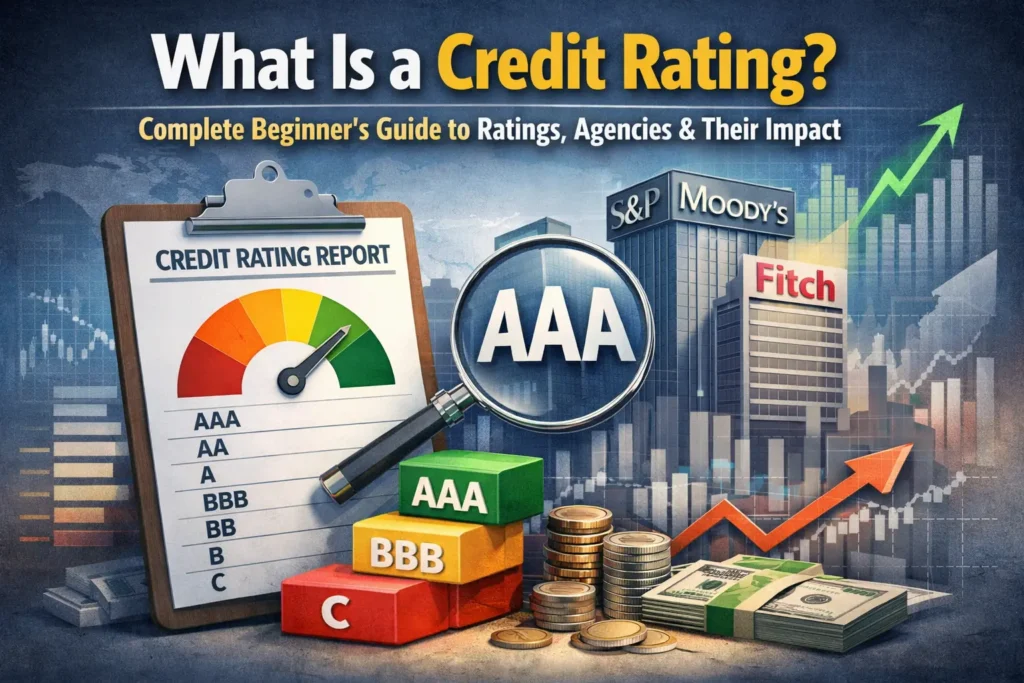
📊 What Is a Credit Rating?
A credit rating is a score given to a company, bank, or government that tells us:
👉 How likely they are to repay their money (debt) on time
Think of it like a CIBIL score, but for companies and institutions instead of individuals.
🏢 Who Gives Credit Ratings?
Credit ratings are assigned by specialized companies called rating agencies.
Some major rating agencies include:
- CARE Ratings Limited
- CRISIL
- ICRA Limited
- Moody’s
- Standard & Poor’s
👉 These agencies analyze financial data and assign ratings based on risk.
🧾 Who Gets Rated?
Credit ratings are given to:
🏦 Banks
To check their financial strength
🏢 Companies
Especially those borrowing money or issuing bonds
🌍 Governments
To assess country-level risk (called sovereign rating)
💰 Financial Instruments
Like:
- Bonds
- Debentures
- Certificates of Deposit (CDs)
🔢 Types of Credit Ratings
Ratings are usually divided into two categories:
1️⃣ Short-Term Ratings
Used for borrowing periods of less than 1 year
Example:
- A1+ (highest safety)
- A1, A2, A3 (lower levels)
👉 Indicates ability to repay in the short term
2️⃣ Long-Term Ratings
Used for loans or bonds lasting more than 1 year
Example scale:
- AAA (highest safety)
- AA
- A
- BBB
- BB, B (risky)
- D (default)
👉 Indicates long-term financial strength
🧠 How Do Rating Agencies Decide?
They analyze multiple factors:
📊 Financial Strength
- Revenue
- Profit
- Debt levels
💧 Liquidity
- Can they pay short-term obligations?
🏢 Business Model
- Stable or risky industry?
👨💼 Management Quality
- Experienced leadership or not?
🌍 Economic Conditions
- Industry trends and risks
📈 What Does Each Rating Mean?
Here’s a simple breakdown:
| Rating | Meaning |
|---|---|
| AAA / A1+ | Very safe (lowest risk) |
| AA / A1 | Strong but slightly lower |
| A / A2 | Moderate safety |
| BBB | Average (borderline safe) |
| BB & below | High risk |
| D | Default (failed to repay) |
💥 Why Credit Ratings Are Important
✅ For Investors
- Helps decide where to invest safely
- Lower risk = safer investment
✅ For Companies
- Better rating = lower interest rates
- Easier to raise money
✅ For Banks
- Shows financial stability
- Builds trust in the market
📉 Impact of Credit Rating Changes
🔼 Upgrade (Rating Improves)
- Positive signal
- Stock price may rise
- Borrowing becomes cheaper
🔽 Downgrade (Rating Falls)
- Negative signal
- Investor confidence drops
- Interest costs increase
🔁 Reaffirmed Rating
- No change
- Indicates stability
- Neutral to slightly positive
⚠️ Important Thing to Remember
👉 A credit rating is not a guarantee
Even highly rated companies can face problems later.
Always:
- Do your own research
- Don’t rely only on ratings
🧠 Simple Example
If:
- Company A = AAA → Very safe
- Company B = BBB → Medium risk
👉 Investors will prefer Company A, even if returns are slightly lower.
🏁 Final Thoughts
Credit ratings act like a financial health report card for companies and institutions.
They help:
- Investors make informed decisions
- Companies build credibility
- Markets stay transparent
👉 For beginners, understanding ratings is a must-have skill before investing
⚠️ Disclaimer
This article is for educational purposes only and does not constitute financial advice. Always consult a financial expert before investing.