7 Indian Companies With Zero Debt That Are Worth Watching
In a world where most companies survive on borrowed money, a zero debt company stands apart.
No interest payments eating into profits. No lenders dictating business decisions. No risk of a debt spiral when business slows down or interest rates rise. Just a clean balance sheet, internal cash generation, and a management team confident enough in their business to fund growth entirely from their own earnings.
Zero debt companies are not just financially safer than their leveraged peers. They are often fundamentally superior businesses — because the ability to grow without borrowing is itself evidence of exceptional profitability, pricing power, and operational efficiency.
In India’s stock market, genuinely debt-free companies with strong business fundamentals are rarer than most investors realise. And among those that exist, only a handful combine zero debt with consistent growth, high returns on capital, and management quality worthy of serious investor attention.
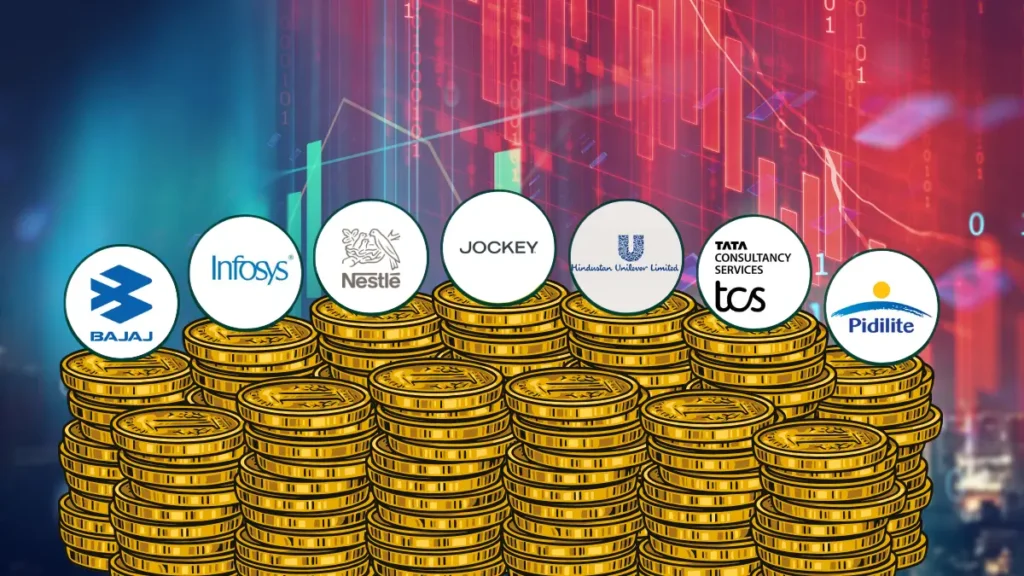
This article profiles seven such companies — businesses that have demonstrated the discipline and capability to operate and grow without debt, and why each one deserves a place on every serious Indian investor’s watchlist.
Important Note Before Reading: This article is for educational purposes only. The companies mentioned are examples of debt-free businesses studied for their financial characteristics — not buy recommendations. Always do your own research and consult a SEBI-registered financial advisor before making any investment decision. Valuations and financial positions change — always verify current data before acting on any information.
Why Zero Debt Matters More Than Most Investors Realise
Before diving into the companies, it is worth understanding exactly why zero debt is such a powerful financial characteristic — because most retail investors significantly underestimate its importance.
Debt amplifies both gains and losses. A company with heavy debt can generate spectacular returns during good times — but when business slows, interest payments continue regardless of revenue. In severe cases, debt can turn a temporary business challenge into a permanent existential threat.
Zero debt companies have unmatched financial flexibility. When a market downturn hits — as they inevitably do — a debt-free company can invest aggressively while competitors are busy managing lender relationships and covenant compliance. This is how genuinely great businesses use downturns to widen their competitive moat rather than just survive them.
Cash generation becomes pure shareholder value. When a company has no interest payments to make, every rupee of operating profit flows more directly to shareholders — through dividends, buybacks, or reinvestment into growth. The compounding effect of this over years and decades is extraordinary.
Management quality signal. A company that has chosen to remain debt-free — especially one that could easily access cheap credit — is often making a deliberate statement about how it views risk, shareholder value, and long-term business building. This kind of conservative, shareholder-friendly management is exactly what long-term investors should be seeking.
With that context, here are seven Indian companies with zero or near-zero debt that are worth understanding deeply.
1. Bajaj Auto — The Debt-Free Giant of Indian Two-Wheelers
Bajaj Auto is one of India’s largest two-wheeler and three-wheeler manufacturers — and one of the most consistently profitable companies in the entire Indian automotive sector.
What makes Bajaj Auto remarkable from a balance sheet perspective is not just that it is debt-free — it is that it sits on an enormous cash and investment pile that dwarfs most of its competitors’ entire market capitalisations. The company generates cash so consistently and so abundantly that it has never needed to borrow, and its treasury investments generate significant additional income every year.
Why the balance sheet is so strong: Bajaj Auto operates an asset-light model relative to many manufacturing businesses. It has built strong brands — Pulsar, Dominar, Chetak — that command pricing power in their segments. Its export business, which contributes significantly to revenue, provides natural currency diversification. And its management has historically been exceptionally disciplined about capital allocation — returning excess cash to shareholders through dividends rather than making questionable acquisitions.
What makes it worth watching: The company’s push into electric vehicles through the Chetak brand and its partnership strategy for new segments positions it for relevance in the next decade of Indian mobility. A debt-free company entering a capital-intensive transition like electrification starts that journey with a significant structural advantage over leveraged competitors.
Key metrics to track: Return on equity, export volumes as percentage of total sales, electric vehicle sales trajectory, and cash and investment position on balance sheet.
2. Infosys — Technology Excellence With a Fortress Balance Sheet
Infosys needs little introduction as one of India’s most globally recognised technology companies. What is less discussed in casual investor conversation is the extraordinary quality of its balance sheet.
Infosys has operated debt-free for essentially its entire listed history. It generates prodigious free cash flow — converting a very high percentage of its net profit into actual cash — and has returned tens of thousands of crores to shareholders over the years through dividends and share buybacks.
Why the balance sheet is so strong: Information technology services is inherently an asset-light business. The primary assets are human capital and intellectual property — neither of which requires debt financing. Infosys’s business model generates cash upfront or on short payment cycles from large global clients, creating a structurally cash-generative operation that has never needed external financing for growth.
What makes it worth watching: The global technology services industry is undergoing significant transformation driven by artificial intelligence, cloud migration, and digital transformation spending. Infosys — with its strong client relationships, global delivery model, and clean balance sheet — is well positioned to capture this transition. A debt-free technology company with consistent cash generation and a demonstrated commitment to returning capital to shareholders is a combination that long-term investors find compelling.
Key metrics to track: Revenue growth in constant currency terms, operating margin trajectory, deal wins and total contract value, attrition rates, and free cash flow conversion percentage.
3. Nestle India — The Consumer Moat That Needs No Debt
Nestle India is one of the most extraordinary businesses in the Indian stock market — and one of the clearest examples of how a genuinely great consumer franchise can fund its own growth without ever needing external capital.
The company behind Maggi noodles, KitKat, Munch, Nescafe, and dozens of other deeply embedded Indian consumer brands generates returns on capital that are among the highest of any listed company in India. It does this while carrying essentially no financial debt — funding all its operations and expansions entirely from internally generated cash.
Why the balance sheet is so strong: Nestle India benefits from one of the most durable competitive moats possible in consumer goods — brand loyalty built over decades across multiple product categories. Maggi noodles, despite the well-documented crisis of 2015 when the product was temporarily banned, came back to reclaim market leadership — a testament to the extraordinary depth of consumer trust the brand commands.
The business collects cash from retailers quickly, pays suppliers on longer cycles, and has relatively modest capital expenditure requirements relative to its profitability. This working capital dynamic generates cash structurally — meaning the business essentially finances itself.
What makes it worth watching: India’s consumption story — rising middle class incomes, increasing urbanisation, growing preference for branded packaged foods — is one of the longest-running structural growth themes in the Indian economy. Nestle India, with its portfolio of trusted brands and its zero-debt balance sheet, is positioned to benefit from this trend for decades.
Key metrics to track: Volume growth versus price growth in revenue, operating margin trends, new product launch cadence, rural distribution expansion, and return on capital employed.
4. Page Industries — The Moat of a Monopoly Brand With Zero Debt
Page Industries is the exclusive licensee of the Jockey brand in India — and one of the most remarkable wealth-creation stories in the history of the Indian stock market.
From a relatively small apparel company, Page Industries compounded its way to a multi-thousand crore market capitalisation through a combination of brand power, distribution excellence, operational efficiency, and — crucially — a debt-free balance sheet that allowed all profits to compound without interest leakage.
Why the balance sheet is so strong: The Jockey brand in India commands such strong consumer loyalty and pricing power that the business generates exceptional margins relative to the apparel sector. Page Industries has consistently maintained return on equity numbers that are among the highest in Indian consumer goods — evidence of a business that generates far more cash than it needs to reinvest for growth.
The company’s manufacturing operations are efficient and relatively asset-light compared to heavier industrial businesses. Its distribution network — covering hundreds of thousands of retail points across India — was built systematically over years from internally generated cash.
What makes it worth watching: India’s organised innerwear and athleisure market is dramatically underpenetrated compared to developed economies. The shift from unbranded local products to branded organised players — driven by rising incomes, e-commerce penetration, and changing consumer preferences — is a long-term structural trend that Page Industries is exceptionally well positioned to capture.
Key metrics to track: Volume growth, average selling price trends, distribution point expansion, e-commerce as percentage of revenue, and return on equity trajectory.
5. Hindustan Unilever — Consumer Goods Dominance Without Borrowing
Hindustan Unilever — HUL — is the Indian subsidiary of global consumer goods giant Unilever, and one of the most widely held stocks among Indian retail investors and institutional funds alike.
What distinguishes HUL from a balance sheet perspective is its ability to operate one of the largest and most complex consumer goods distribution networks in India — reaching over eight million retail outlets across the country — without carrying meaningful financial debt. The business is so cash generative that it funds this extraordinary operational scale entirely from internal resources.
Why the balance sheet is so strong: HUL’s portfolio spans home care, personal care, and food and beverages — brands like Surf Excel, Dove, Lux, Lifebuoy, Horlicks, and Knorr that are household names across income segments and geographies. This portfolio diversification creates extraordinary revenue stability — even in economic downturns, consumers continue buying soap, shampoo, and detergent.
The FMCG business model — fast inventory turnover, strong retailer relationships, pricing power built on brand trust — generates working capital that is inherently self-funding. HUL collects cash fast and has significant negotiating power with suppliers, creating a cash generation dynamic that requires no debt.
What makes it worth watching: HUL’s rural penetration story — as Indian rural incomes rise and branded goods replace unbranded local alternatives — remains one of the most compelling long-term growth narratives available in the Indian market. The company’s premiumisation strategy — moving consumers up from basic to premium product variants — is additionally expanding margins over time.
Key metrics to track: Volume growth versus price growth, rural versus urban sales mix, operating margin trajectory, premiumisation progress across categories, and dividend payout history.
6. Tata Consultancy Services — The Cash Machine of Indian Technology
Tata Consultancy Services — TCS — is India’s largest company by market capitalisation and one of the most consistently cash-generative businesses in the world.
TCS operates with essentially zero financial debt. It generates free cash flow so abundantly — converting an exceptionally high percentage of net profit into actual cash — that it has returned hundreds of thousands of crores to shareholders over its listed history through a combination of dividends and buybacks, while simultaneously funding all its growth needs internally.
Why the balance sheet is so strong: Like Infosys, TCS operates in the inherently asset-light world of IT services. But TCS has an additional advantage — its scale. With revenues in the hundreds of thousands of crores and clients spanning virtually every major global industry, TCS has a revenue stability and client relationship depth that creates an exceptionally predictable, recurring cash flow stream.
The company’s workforce of over six lakh employees across the world generates revenue that flows with minimal capital expenditure requirements relative to industrial businesses. The result is a cash conversion cycle and free cash flow generation that most businesses in any sector can only aspire to.
What makes it worth watching: The global technology services market is entering a significant transformation phase driven by artificial intelligence integration, cloud infrastructure migration, and enterprise digital transformation. TCS — with its global scale, deep client relationships across industries, and a balance sheet with no debt and enormous cash reserves — starts this transition from a position of extraordinary strength.
Key metrics to track: Revenue growth in constant currency, operating margin, deal total contract value — a leading indicator of future revenue, attrition rates, and free cash flow as percentage of net profit.
7. Pidilite Industries — The Adhesives Giant That Glues Profits Together
Pidilite Industries is one of India’s most underappreciated wealth-creation stories — a company so dominant in its core product category that its brand name has become the generic term for the entire product.
Ask anyone in India for adhesive and they ask for Fevicol. That is the depth of brand monopoly Pidilite has built over decades — and it has done so while maintaining a debt-free balance sheet and generating returns on capital that rank among the highest in Indian manufacturing.
Why the balance sheet is so strong: Pidilite’s business model combines extraordinary brand loyalty with a product that is genuinely essential across construction, furniture making, art and craft, and dozens of industrial applications. This creates pricing power — the ability to pass on cost increases to customers without losing significant volume — that directly protects margins and cash generation.
The company has expanded methodically from its Fevicol core into adjacent categories — Dr. Fixit waterproofing, M-Seal, Fevikwik — each leveraging the same distribution network and brand trust. This expansion has been funded entirely from internal cash generation — no debt required at any stage.
What makes it worth watching: India’s construction and real estate sector — a major end market for Pidilite’s products — is entering a long multi-year growth cycle driven by infrastructure spending, housing demand, and commercial construction. Pidilite, as the dominant supplier of adhesives and construction chemicals in India, is structurally positioned to benefit from this cycle while its zero-debt balance sheet ensures it can invest in capacity expansion and distribution without financial stress.
Key metrics to track: Volume growth in core adhesives segment, construction chemicals segment growth, rural distribution expansion, raw material cost trends and their impact on margins, and return on capital employed.
What These Seven Companies Have in Common
Looking across all seven companies, a clear pattern emerges — and it is worth articulating explicitly because it contains the essence of what makes a zero-debt company genuinely valuable rather than just financially conservative.
Durable Competitive Moats Every one of these companies has a genuine reason why competitors cannot easily take their market share. Whether it is brand loyalty built over decades, scale advantages, switching costs, or distribution depth — each has something that protects its profitability structurally.
Pricing Power Debt-free companies are usually debt-free because they have pricing power — the ability to charge what their products and services are truly worth rather than competing on price. Pricing power is what generates the margins that make debt unnecessary.
Disciplined Management In every case, the management teams behind these businesses have demonstrated a long-term orientation — prioritising sustainable compounding over short-term growth achieved through financial engineering. This is reflected not just in the balance sheet but in capital allocation decisions, dividend histories, and communication with shareholders.
Consistent Financial Performance None of these companies built their balance sheet strength in one or two good years. Each has demonstrated sustained profitability and cash generation across multiple business cycles — through recessions, currency crises, sector downturns, and global shocks.
Ability to Self-Fund Growth Perhaps most importantly — each of these companies has demonstrated that it can grow without external capital. This is the ultimate validation of a truly excellent business model.
How to Use This Information as an Investor
Understanding that a company is debt-free is an important starting point — not a conclusion.
A debt-free company at an extreme valuation can still be a poor investment. A company that is debt-free today because it has been shrinking rather than growing is not the kind of business being described here. Zero debt is a quality filter — the beginning of research, not the end of it.
The right way to use this information is as a starting point for deeper investigation:
Verify the current financial position. Balance sheets change. Always check the most recent quarterly and annual filings to confirm debt status before making any assumptions.
Evaluate the valuation. Great businesses at excessive valuations deliver poor returns. Use P/E, P/B, and free cash flow yield metrics to assess whether the current market price reflects a reasonable entry point.
Assess growth prospects. A debt-free company in a stagnant or shrinking market is less interesting than one with a large runway of growth ahead. Understand the market dynamics before committing capital.
Study the management track record. Read the last five years of annual report letters to shareholders. Understand how management has allocated capital historically — that track record is the most reliable predictor of future capital allocation quality.
Consider position sizing. Even the best businesses can face temporary headwinds. Appropriate position sizing — never concentrating too heavily in any single stock regardless of quality — remains the foundation of sound portfolio construction.
Final Thoughts
In a market where debt is normalised and leverage is celebrated as a growth tool, companies that choose to operate without borrowing stand apart — not just financially, but philosophically.
These seven Indian companies have demonstrated something rare and valuable: the ability to build genuinely great businesses, grow consistently, and create extraordinary shareholder wealth — all without ever needing to rely on borrowed money.
Their balance sheets are not just clean. They are statements of confidence — in the quality of their business models, in their ability to generate cash, and in the long-term value they are building for shareholders.
For the serious Indian investor building a long-term portfolio, understanding businesses like these — their moats, their financials, their growth prospects, and their management quality — is not just useful.
It is essential.
Disclaimer: This article is for educational and informational purposes only and does not constitute financial or investment advice. The companies mentioned are used as educational examples of debt-free businesses and do not represent buy or sell recommendations. Financial positions, valuations, and business conditions change — always verify current data and consult a SEBI-registered financial advisor before making any investment decisions.