
Why Most Beginners Lose Money in Their First Year of Trading
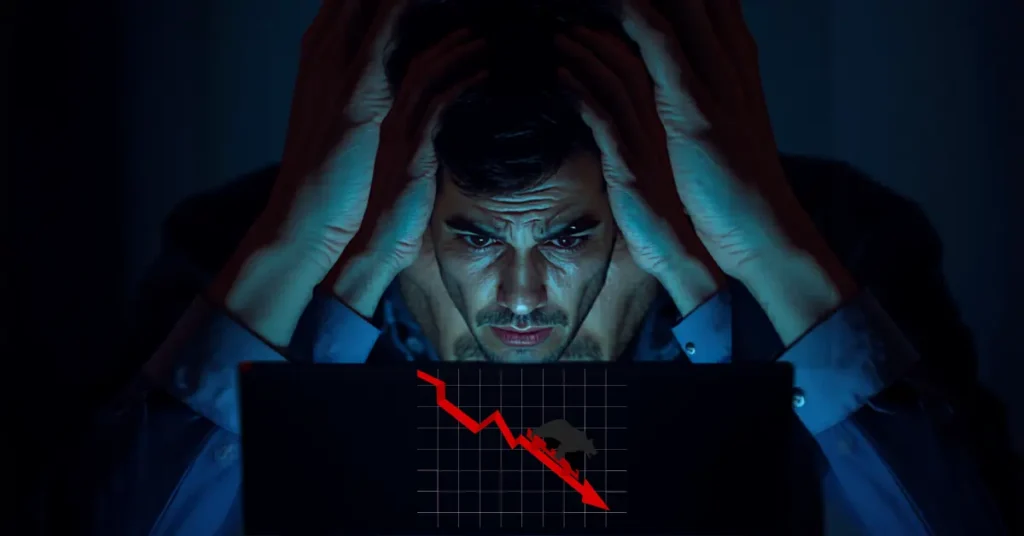
Most people enter the stock market with high hopes and leave their first year with empty pockets.
Statistics don’t lie — studies suggest that a significant majority of retail traders lose money, especially in their first 12 months. But here’s the uncomfortable truth: it’s rarely about bad luck. It’s almost always about behavior, psychology, and a lack of preparation.
If you’re just starting out — or you’ve already lost money and want to understand why — this article breaks down the exact reasons beginners bleed capital in year one, and what separates those who survive from those who quit.
1. They Start Without a Plan — and Trade on Emotion
The number one killer of beginner accounts is the absence of a trading plan.
Most new traders open a brokerage account, deposit money, and start buying stocks based on tips from YouTube, Reddit threads, or a friend’s advice. There’s no entry strategy, no exit strategy, and no idea how much they’re willing to lose on any single trade.
What happens next is predictable. When a trade goes against them, panic sets in. They hold losing positions hoping the stock will “come back.” When a stock is going up, greed takes over and they buy more at the top — right before the reversal.
This is called emotional trading, and it is the fastest way to destroy a portfolio.
What smart traders do instead: They define their trade before they enter it. They know exactly at what price they’ll exit if wrong (stop loss), and at what price they’ll take profits. The decision is made with a calm mind — not in the heat of the moment.
2. They Ignore Risk Management Completely
Ask most beginner traders what percentage of their account they risk per trade, and you’ll get a blank stare.
Risk management is the unglamorous side of trading that nobody on social media talks about — because it’s not exciting. But it is the only reason professional traders are still in the game after years of trading.
Here’s a common beginner scenario: A new trader has ₹50,000 in their account. They see a “hot tip” and put ₹40,000 into a single trade. The stock drops 20%. They’ve just lost ₹8,000 — 16% of their entire account — on one bad trade.
Professional traders typically risk 1–2% of their total capital per trade. That means even a losing streak of 10 trades in a row doesn’t wipe them out. They live to trade another day.
The rule beginners must learn early: Protect your capital first. Profits come second. You cannot make money if you have no money left to trade.
3. They Overtrade — Constantly Jumping In and Out
More trades do not mean more profits. In fact, for most beginners, the opposite is true.
Overtrading happens because beginners confuse activity with progress. They feel like they need to always be in a position, always doing something. Sitting in cash feels like wasting time. But in reality, waiting for the right setup is one of the most important skills a trader can develop.
Every trade also comes with a cost — brokerage fees, transaction charges, taxes. If you’re making dozens of trades a week with small gains, these costs silently eat your profits.
There’s also a psychological cost. Too many open positions means too much mental load, too many decisions, and too many opportunities to make emotional mistakes.
What beginners should aim for instead: Quality over quantity. Wait for high-confidence setups. A trader who makes 5 well-planned trades a month can outperform someone making 50 random ones.
4. They Don’t Understand What They’re Buying
This one is surprisingly common — and dangerous.
Many beginners buy stocks simply because the price is going up, or because someone they follow online said it was a good buy. They have no idea what the company actually does, whether it’s profitable, what its debt looks like, or why the stock is moving.
This approach turns investing into gambling. And like gambling, it occasionally works — which makes it even more dangerous, because early wins create false confidence.
When the market turns or the stock crashes after bad earnings, the beginner has no framework to decide what to do. Should they hold? Sell? Buy more? Without understanding the business, every decision is a guess.
The fix: Before buying any stock, be able to answer these basic questions —
- What does this company do and how does it make money?
- Is it profitable? Is revenue growing?
- Why is the stock moving right now?
- What would make me sell this stock?
You don’t need to be a financial analyst. You just need a basic understanding of what you own.
5. They Chase “Hot Tips” and Social Media Stocks
Social media has created an entire ecosystem of stock tips, influencer picks, and viral trades. For beginners, this is one of the most dangerous environments to operate in.
Here’s what typically happens with a viral stock tip:
By the time it reaches you — through Twitter, YouTube, a Telegram group, or a WhatsApp forward — the people who actually made money on it bought it days or weeks earlier. You are buying their exit. You are the liquidity they needed to sell.
This pattern is so common it has a name: pump and dump. And even in cases where there’s no manipulation, hype-driven stocks are some of the most volatile and unpredictable assets to trade.
What beginners should do: Develop your own watchlist based on your own research, even if it’s simple. Learning to trust your own analysis — however basic — will serve you far better than following someone else’s “hot pick.”
6. They Have No Patience — and Expect Fast Money
The market has a brutal way of humbling people who come in expecting quick riches.
Beginner traders often enter with unrealistic expectations — doubling their money in weeks, quitting their jobs after a few wins, turning ₹10,000 into ₹1 lakh in months. These expectations aren’t random — they’re fed by highlight reels on social media where people share only their wins, never their losses.
The reality of trading is far more boring and slow. Consistent, compounding returns over months and years is how real wealth is built. Even professional traders have losing months.
When the fast money doesn’t come, frustration leads to bigger, riskier bets to “make back” losses — a destructive spiral that ends most trading careers before they really begin.
Mindset shift required: Treat your first year as a learning year, not an earning year. Your goal in year one is to not blow up your account, understand how markets work, and develop discipline. The profits follow naturally from that foundation.
7. They Never Review Their Trades or Learn from Mistakes
If you keep making the same mistakes without realizing it, no amount of time in the market will make you better.
Most beginners don’t keep a trading journal. They don’t review why they entered a trade, why they exited, what their emotions were, and what the outcome was. So they repeat the same errors — buying on hype, panicking on red days, holding losers too long — in an endless loop.
The traders who improve fastest are the ones who treat every trade as data. A losing trade isn’t a failure if you extract a lesson from it. A winning trade isn’t automatically a success if you got lucky for the wrong reasons.
Simple habit to start today: After every trade, write down three things — why you entered, what happened, and what you’d do differently. Even doing this in a basic notebook will accelerate your learning faster than watching 100 trading videos.
The Honest Truth About Year One
Your first year of trading is almost guaranteed to be humbling. That’s not a pessimistic view — it’s a realistic one shared by almost every experienced trader looking back at their journey.
The beginners who survive and eventually thrive are not the ones with the best stock picks in year one. They’re the ones who:
- Protect their capital over chasing profits
- Trade with a plan instead of emotion
- Keep position sizes small while they’re learning
- Stay curious and keep learning instead of assuming they know enough
- Accept that losses are part of the process — not a reason to quit
The stock market doesn’t reward the smartest person in the room. It rewards the most disciplined one.
Final Thoughts
Losing money in your first year of trading is common — but it doesn’t have to be permanent, and it doesn’t have to be catastrophic. The traders who use year one as an education rather than an expectation of riches are the ones who are still trading — and profiting — years later.
Start small. Learn constantly. Risk little. And be patient.
The market will always be there. Make sure you are too.
Disclaimer: This article is for educational purposes only and does not constitute financial advice. Always do your own research before making any investment decisions.